How Much Should We Understand Knowledge
Posts about Personal Thoughts and Growth
Have you ever thought that AI will change many things, and that day will come faster than you think? If so, when?
I first thought that AI would change many things when GitHub Copilot was released in July 2021. And I first thought it would come faster than expected when GPT 3.5 was released in November 2022. After seeing GPT-4, GPT-4o, and then o1-preview that came out consecutively, I realized it’s almost right in front of us. This speed seems to be accelerating, and it has many implications especially for knowledge workers. How much of human cognitive ability can we rely on through collaboration with GPT? How much should we understand knowledge?
But what about now? Anyone can get the information they want through the internet. You can meet experts through the internet and learn whatever process you want. And it only takes a few seconds to get the information you want. Because of this, the way people solve new problems has changed a lot over the past decade or so. Think about digital dementia, the so-called decrease in short-term memory levels. In tests confirming whether digital dementia is actually a result of decreased cognitive ability, the conclusion was “it didn’t decrease.” Due to the development of smartphone storage, there’s no need to memorize, so cognitive ability has been allocated elsewhere.
However, in the process of consciously learning something, we’re not using even a tenth of these changes in our brains. The learning methods taught or required by most educational institutions are still not much different from decades ago. Even 10 years ago, the gap between real-world problems and test problems was a serious issue, and that gap is growing rather than being resolved. How should we learn in this wave of change?
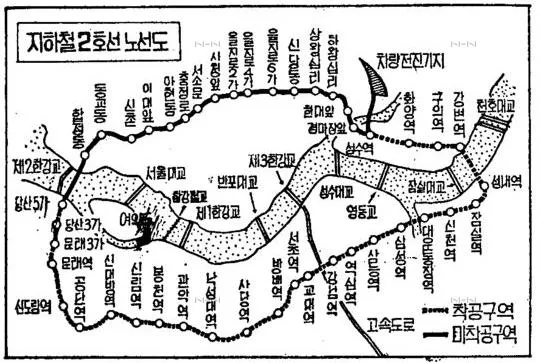
(Left) Old Line 2 route map
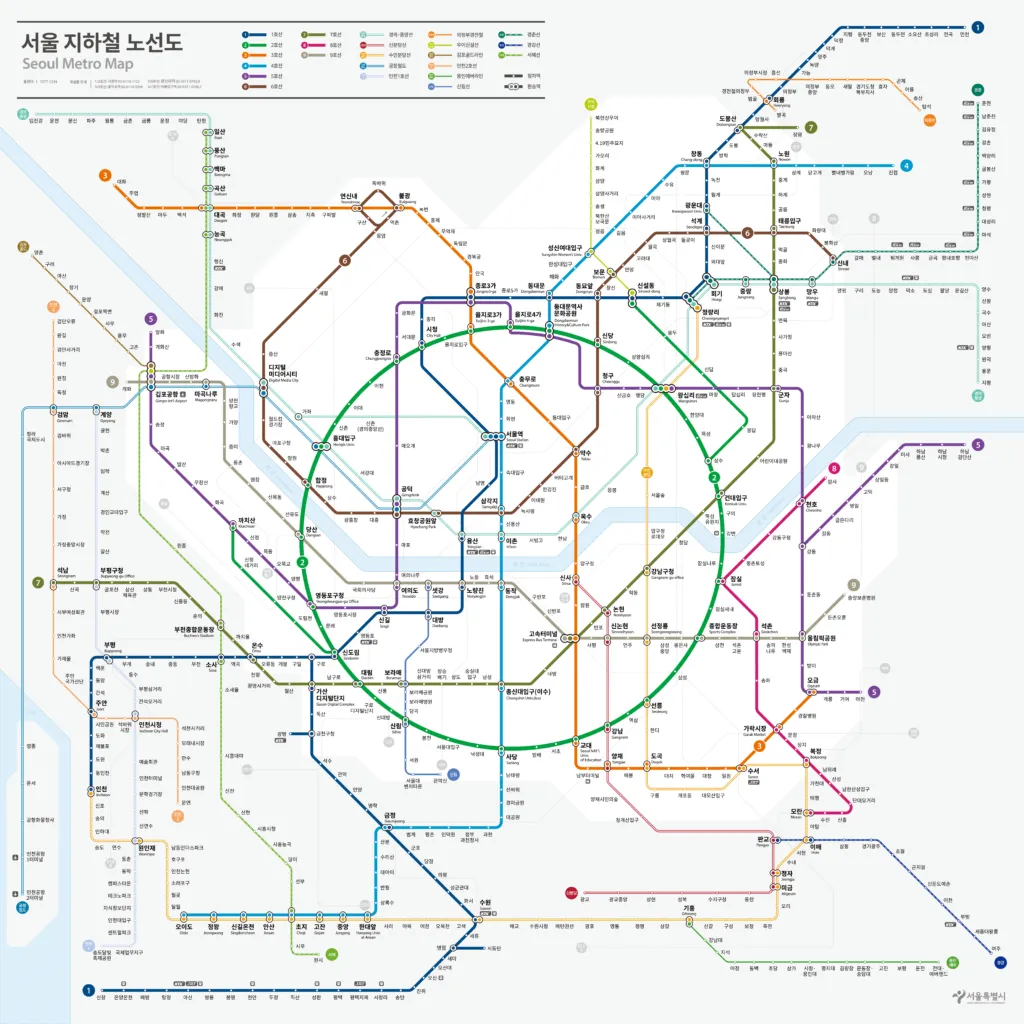
(Right) Latest Line 2 route map
I brought these two photos because they seem like good analogies. Note that both left and right depict the Line 2 route. The left image is drawn with detailed consideration of the actual distance between stations and the actual shape of the subway route. But the current Line 2 route map, while insufficient for knowing exact locations, will at least burn into your brain the fact that Line 2 is circular.
In the past, the cost of finding and verifying knowledge was high and little information was reviewed in our cognitive domain, so remembering one piece of information firmly and specifically would have been important. But now? The cost of finding and verifying knowledge has decreased, and the information we need to accept and judge has greatly increased. Accordingly, just structuring “what form a certain concept has and how it connects to other information” prepares you to use that knowledge.
However, be careful of the efficacy trap. When doing the above, learning speed is fast, so you might focus only on learning quickly rather than actually applying. This way, nothing remains in the end. It would be better to pick a problem to solve within a field you really need or want to explore and approach it by solving that problem. Rather than memorizing how to calculate everything in detail, it would be better to change the paradigm of learning to what approach is generally used to solve problems and the experience of solving problems that way.